FOR years, the idea of Nakonde becoming a major economic and aviation centre sounded like the kind of promise that belonged to another future.
The town was busy, certainly, but its importance was largely defined by what passed through it: trucks, cargo, traders and travellers crossing between Zambia and Tanzania.
Now, that picture is beginning to change.
Across Nakonde, construction activity is becoming difficult to miss.
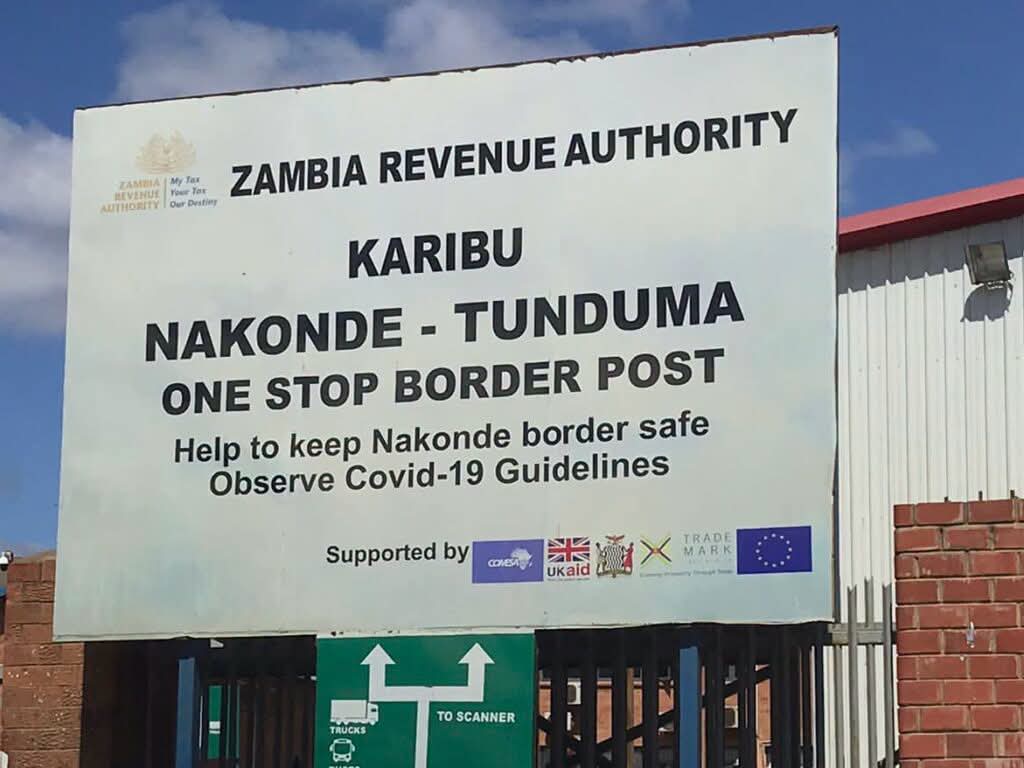
The upgraded One Stop Border Post is already changing the face of the border, while work on a new international airport at Mwenzo has commenced.
At the same time, the planned revitalisation of the Tanzania-Zambia Railway Authority (TAZARA), improvements to the northern transport corridors and other infrastructure investments are creating the ingredients for a very different Nakonde.
The ambition is no longer simply to make Nakonde a better border town. It is to turn it into a place where goods, people, capital and opportunities converge.
President Hakainde Hichilema has described the vision in particularly striking terms: Nakonde should not remain merely a transit point, but become an “interconnector” to different markets. The Government has also positioned airport development as part of a wider effort to turn Zambia’s strategic airports into regional logistics hubs.
For residents who have watched the town expand over the past few years, the transformation already feels tangible.
“Nakonde is growing at a fast rate, even surpassing Chinsali and Mpika in the province,” says Nakonde Chamber of Commerce chairman Thomas Botha.
For him, the airport fills a gap that has long existed in the town’s economic ecosystem.
Clearing and forwarding remains one of Nakonde’s biggest employers, but the business community has traditionally depended on road transport and the border crossing. An international airport, he believes, could bring another layer of commercial activity.
The airport is being developed in the Mwenzo area by the Zambia National Service (ZNS), under a K2.8 billion contract. The site was handed over in 2025, with a 36-month contract period covering design, approvals and construction. Parliamentary reporting indicates that completion is expected by the end of 2028.
The scale of land earmarked for the development is equally significant. Recent reports put the airport site at about 2,000 hectares—an area roughly equivalent to 20 square kilometres.
That is a substantial footprint for a town of Nakonde’s present size and suggests that the project should be viewed not merely as construction of a runway and terminal, but as the beginning of a much larger urban and economic expansion around the airport.
The development has, however, come with a human cost that cannot be overlooked.
Nakonde Council Secretary Donald Mwanza says more than 90 verified families affected by the Mwenzo project have been compensated, with local authorities reporting compensation of about K13 million.
Mr Mwanza adds that the local authority has the necessary capacity and is ready to handle the anticipated transformation.
“The establishment at the council is fit and ready to handle the scale of transformation, “he said.
“Most of the land in Nakonde is customary. So we are converting most of it into statutory leasehold.”
For traditional leaders and residents, the hope is that this sacrifice will translate into lasting opportunity.
Headwoman Katozi sees the coming changes in deeply personal terms. Development, she says, will bring not only jobs and business, but greater connectivity and dignity. For many residents who currently travel to Mbeya in Tanzania to catch flights, the prospect of boarding a plane from Nakonde represents a profound change in everyday life.
“Now we will just be flying from Nakonde,” she says.
Chieftainess Waitwika, whose traditional area provided land for the airport, describes the project as a dream come true.
But the airport will be only one piece of a much larger transformation.
In March 2026, President Hichilema commissioned Phase One of the upgraded Nakonde One Stop Border Post. The modernised facility includes a drive-through cargo scanner capable of processing more than 100 trucks an hour, a concrete truck parking yard, warehouses, offices, verification facilities and other supporting infrastructure. Phase Two is being supported by a US$19.6 million World Bank grant.
The significance is difficult to overstate. Nakonde sits on the North-South and Dar es Salaam corridors and is one of the principal gateways for cargo moving between Zambia, Tanzania and the wider region.
Faster clearance means less time for trucks sitting at the border, lower logistics costs and greater potential for trade.
Then there is TAZARA.
Zambia, Tanzania and China signed a US$1.4 billion agreement to revitalise the railway, with the first phase focusing on upgrading the Dar es Salaam-Kapiri Mposhi main line.
If the railway, road network, border and airport develop as envisaged, Nakonde could become a rare multimodal logistics centre where air, rail and road transport meet at an international border.
And that is where the real Nakonde story begins.
What will Nakonde look like?
A decade from now, if the major projects are completed and operate as intended, today’s Nakonde may be difficult to recognise.
The Mwenzo airport area could develop into a new commercial edge of town, with an airport terminal surrounded by hotels, offices, vehicle-hire businesses, restaurants, warehouses, freight facilities and service stations. Roads connecting the airport to the CBD and border could become busier and more commercially developed.
The traditional CBD around Katozi and Ntindi could expand outward as businesses seek space for offices, shops, accommodation and services. Areas that are currently customary land could increasingly become planned residential, commercial and industrial neighbourhoods as the council converts land into statutory leasehold and attempts to manage urban growth.
Along the border, the modern OSBP could become the engine room of a more sophisticated logistics economy. Clearing agents, freight companies, customs specialists, banks, insurance firms, truck parks, repair workshops and warehousing businesses could multiply.
The railway could provide another artery, allowing more cargo to move efficiently towards Dar es Salaam and reducing dependence on trucks alone.
And around all of this would emerge the less visible infrastructure that makes a modern economic hub work: electricity, water, telecommunications, schools, health facilities, housing and skills-training institutions.
That last element may determine whether Nakonde’s transformation becomes truly inclusive.
Mr Botha believes the town urgently needs a skills-training centre because investors will require workers with the right qualifications. Without deliberate investment in local people, there is a danger that Nakonde could attract investment while many residents remain spectators to its growth.
The opportunity, therefore, is bigger than an airport.
It is the possibility of creating a new Nakonde—a connected, urban, commercially vibrant border city whose location is no longer simply a geographic advantage, but its greatest economic asset.
For a town that once seemed destined to remain a stopping point between Zambia and Tanzania, that is a remarkable change.
The dream at Mwenzo is no longer just about planes taking off and landing.
It is about Nakonde itself taking off.
Source: NEWTON SIBANDA/ZAMBIA DAILY MAIL
 Bus Explorer Tours
Leave a comment